
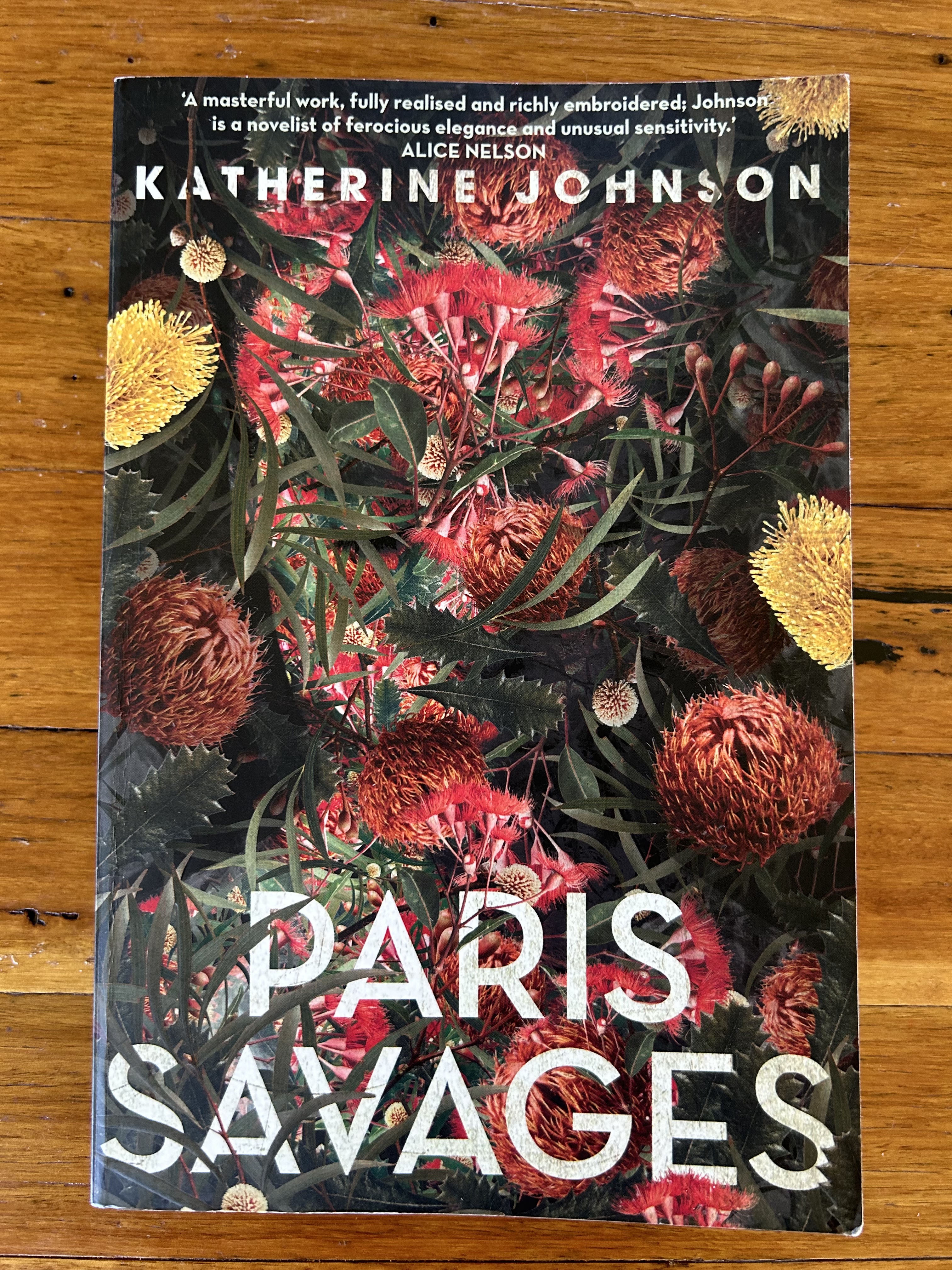
Based on real events, Katherine Johnson’s fictional account of three Fraser Island (K’gari) aboriginal (Badtjala) people travelling with their German minders to Europe in 1882 to perform in ‘human zoos’, is thought-provoking. Apparently Johnson completed a PhD on the research that formed the narrative backbone of the book.
Europeans and Americans had developed a popular appetite for seeing exotic animals and peoples on display in their home cities, often together (‘anthropozoological shows’), and of course that represented a business opportunity. The famous P.T. Barnum took a group of Australian aborigines to the USA, and Carl Hagenbeck sponsored this Badtjala crew to tour Europe, where they performed boomerang throwing and more.
Louis Muller was a real life German engineer, who accompanied Dondera, her uncle Jurano and Bonny on the trip. Following a series of brutal massacres of his people, proud Badtjala man Bonny had decided to join the voyage to Europe with the express intent of meeting the Queen of England to make representations on their behalf.
Muller’s fictional daughter Hilda carries the narrative, as does a disembodied spirit. First performance is at Hagenbeck’s Tierpark zoo in Hamburg and then they go on tour through Germany, London and France. In Lyons Bonny is inspected and measured by anthropologists, who even painfully create a full body plaster cast of him. True events!
Why the book is called Paris Savages eludes me, as Paris is in fact less important to the story than the other European cities they visited. Maybe Hamburg Savages wouldn’t sound as chic?
My only other quibble is with the personalisation and roaming habits of the extra ghostly narrative voice. Evoking the rich spiritual world of our heroes works fine for me, as does the classic, omniscient third person voice. But not the narrator spirit having a character and travelling instantly across the world to report back on goings-on. Unconvincing.
I had the same problem with Hannah Kent’s Devotion, where a main character morphs into a spirit and takes over the ending of the realist story, which I had found engrossing till then.
Putting those minor whinges aside, I enjoyed the book, with its deft handling of life on K’gari, the inner lives of the main characters, and the interactions of our mob and their strange new European environment. Questions about who are the real savages, greed and exploitation, and the wholesale (and misguided) arrogance of the European ‘scientific’ community, are ripe for our cogitations.
No doubt some critics may question storytelling by white fellas yet again of indigenous experiences, but I’m okay with anybody telling any story as long as it works.
 KOOKYNIE COURIER
Journalists of German public broadcaster NDR tried to get statments of the Hagenbeck family who still run the Zoo in Hamburg, why they until today don’t want to face the history of their business – but even 2022 the reporters couldn’t get any answers from them, If you understand German, the NDR report is an interesting addition to P’s review, here’s the link https://daserste.ndr.de/panorama/archiv/2022/Menschenzoo-Das-dunkle-Erbe-des-Tierparks-Hagenbeck,hagenbeck1448.html