
Japan is a fascinating country, that we visited in July. Aussies are flocking to the ‘Thinking Man’s Bali’. The mix of modernity and tradition is stimulating and thought-provoking, so here’s a few low brow introductory impressions of an ancient culture – and minimum three Japanese words to learn.
Public toilets are undoubtedly a hallmark of civilisation, and Japan is probably world leader in their ubiquity and cleanliness – almost on every street corner! Way beyond the meagre standards of France and Germany (ashamedly, both still have toilet attendants or turnstiles to take a buck off you). Since my last trip to Japan forty-five years ago the toilet landscape has been revolutionised.
In a wonderful, eclectic book of essays on Japan in The Passenger series, Giacomo Donati explains that there are no concessions to immaculate hygiene in Japanese life. School children clean their classrooms and people look after the street in front of their houses. There are no litter bins, and people take their rubbish home for recycling. I can certainly attest to that, after we searched in vain for a bin in Tokyo one day to dispose of a wrapper.
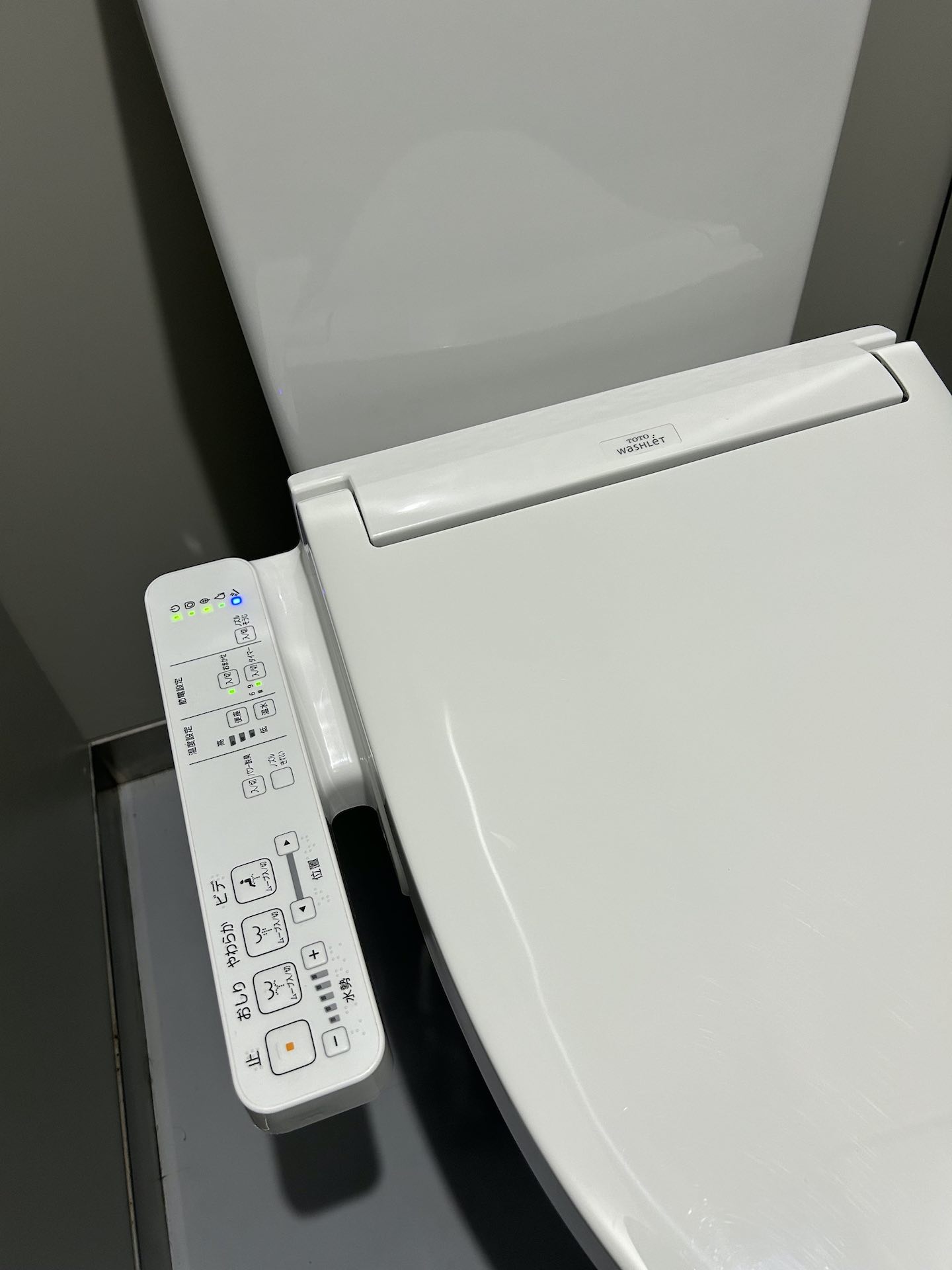
The woshuretto is the ubiquitous, multi-function, electronic toilet, now installed in three out of four homes in Japan. Introduced by the Toto toilet manufacturer, it took off in the 1990s – with functions for backside and front-bottom rinsing, heated seat, warm air drying, automatic flushing, music to cover embarrassing sounds, disinfectant spray and more.
Donati reckons that with practice ‘you can have a ball’, but I wasn’t sure if that pun was intended or a cheeky (oh yeah) translation from the original Italian text. I’ll spare you his descriptions of the subtle pleasures of ‘reverse baptism’ and that Toto-lly Japanese feeling afterwards! Personally I was too wary of the Japanese-signed controls (or too puritan?) to have as much fun as him, but I did get my rear end pleasantly rinsed a few times.
On the other hand, I can certainly extol the pleasures of the public bath or onsen, which we took to like ducks to water, so to speak. Even small villages had a choice of facilities. Using water from natural hot springs bubbling up from Japan’s volcanic sub-strata, entry was a few dollars.
Naked patrons wash themselves on low stools, with wash products supplied and a mirror each, and then rinse carefully before getting in the communal hot tub for ofuro – post washing immersion and relaxation. Males and females are separated, although apparently there are mixed onsens in natural settings like ocean-side pools. A wonderful Japanese tradition.
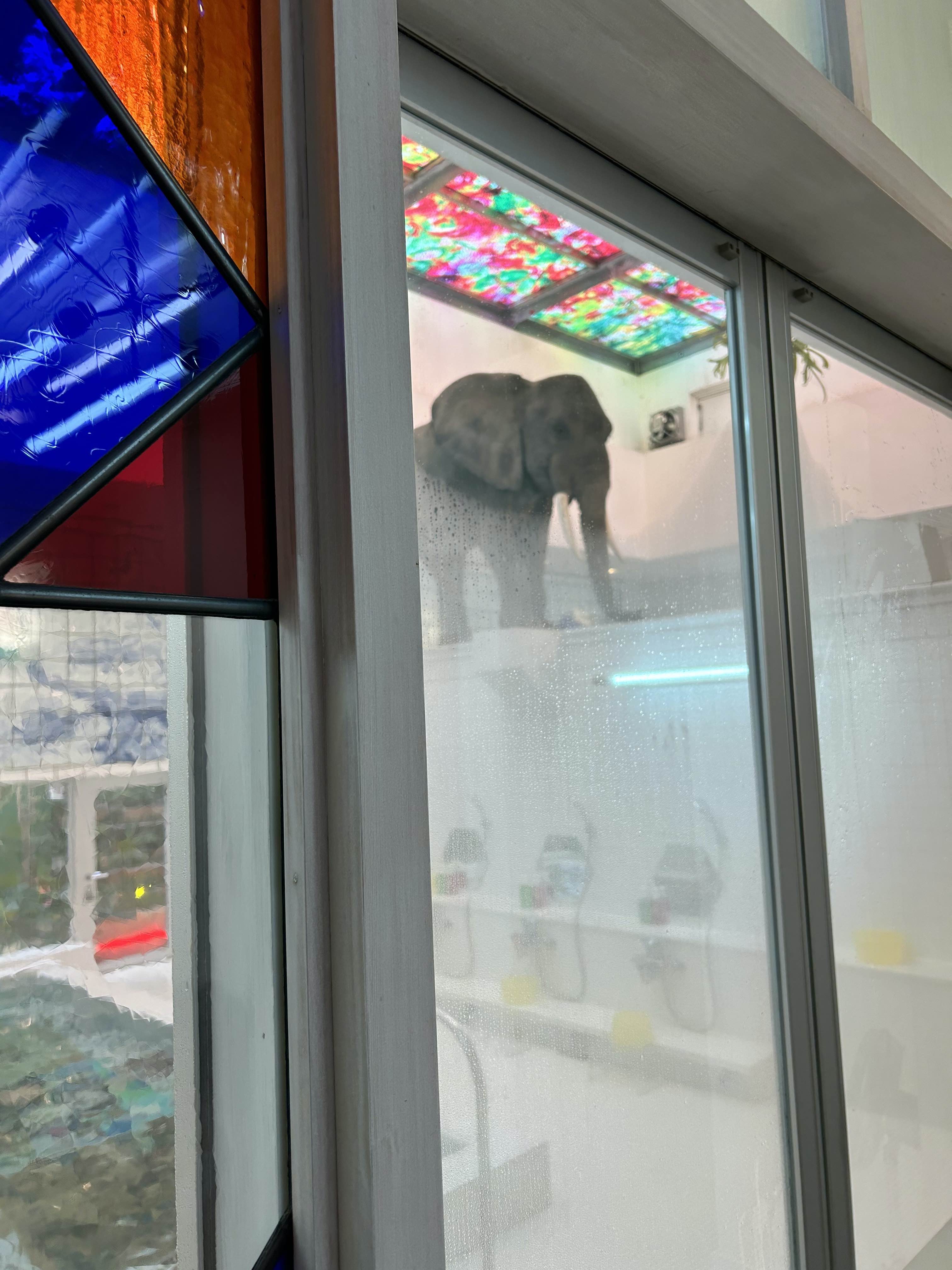
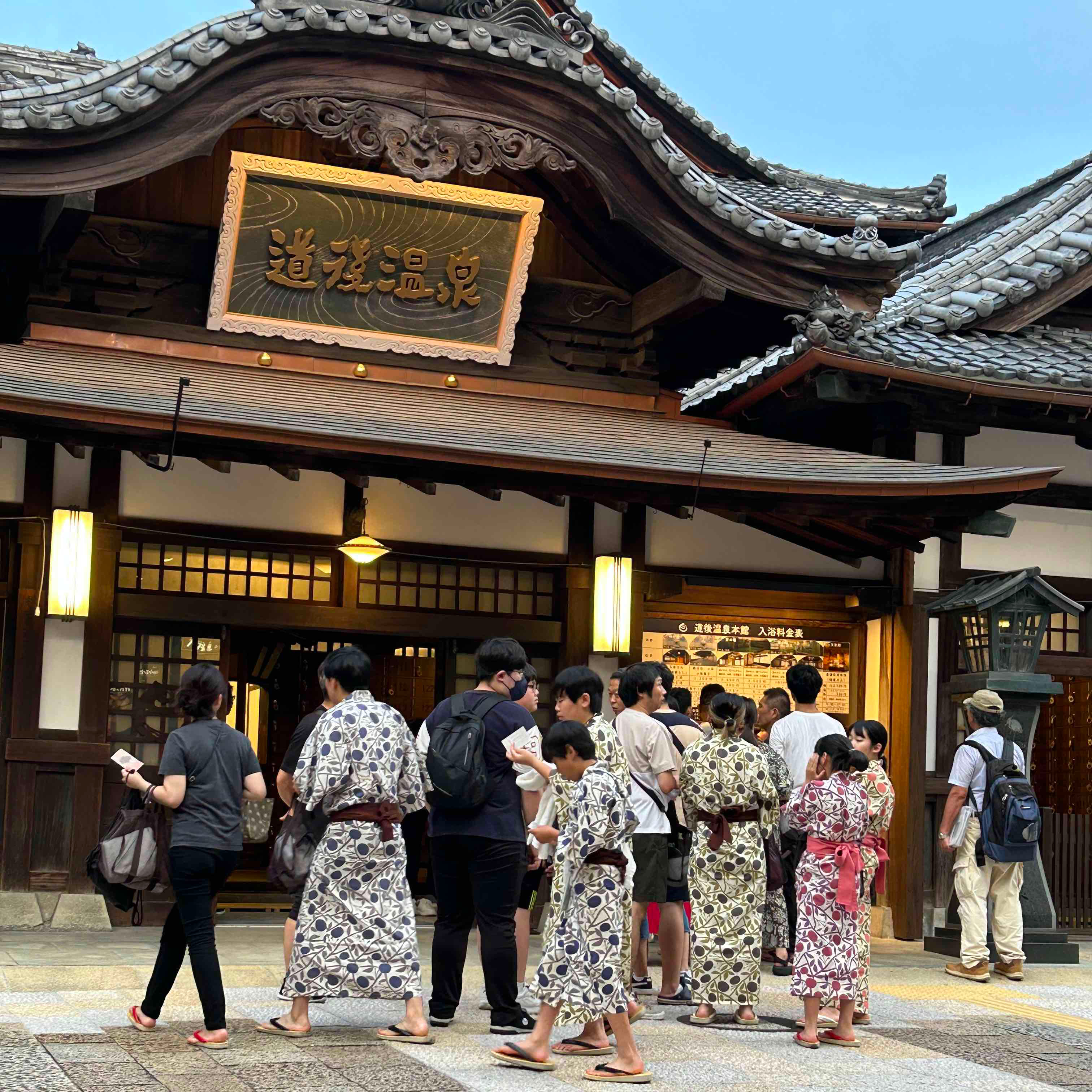
Two notable examples we visited are shown below. Naoshima is an ‘Art Island’ in the Seto Inland Sea, and home to this arty onsen with its quirky exterior and elephant in the bath room. And the city of Matsuyama on the north-west corner of Shikoku has Japan’s oldest onsen, with visitors perambulating in the streets in our yukatas. So civilised!
Now, on the other other side of my visitor’s superficial sociology ledger, Japanese tolerance of us foreigners or gaijin is not universal. We were refused entry several times at local restaurants (izakayas) with available space inside – often with X-shaped crossed arms and embarrassed looks. An interesting and rare experience of racism for us privileged white folk. Discomfort with having to deal in English may be a partial explainer, but I have read elsewhere about Japanese xenophobia.
Anyway, that’s just scratching the surface of a fascinating culture. The Passenger essays also help to unpack other subjects: ancestor worship with wooden cemetery markers called sotoba and indoor memorial tablets (ihai), pride in work (shokunin), childish cuteness (kawaiii) as in anime culture, overwork demise (karoshi), and more.
I recommend the book and the country. Banzai!



 KOOKYNIE COURIER