
While viewing an exhibition of European paintings in a Porto (Portugal) art gallery two years ago, I was surprised to see a 19th century portrait of an Aboriginal figure in an Australian landscape – ‘Regulo Australiano’ by Artur Loureiro.
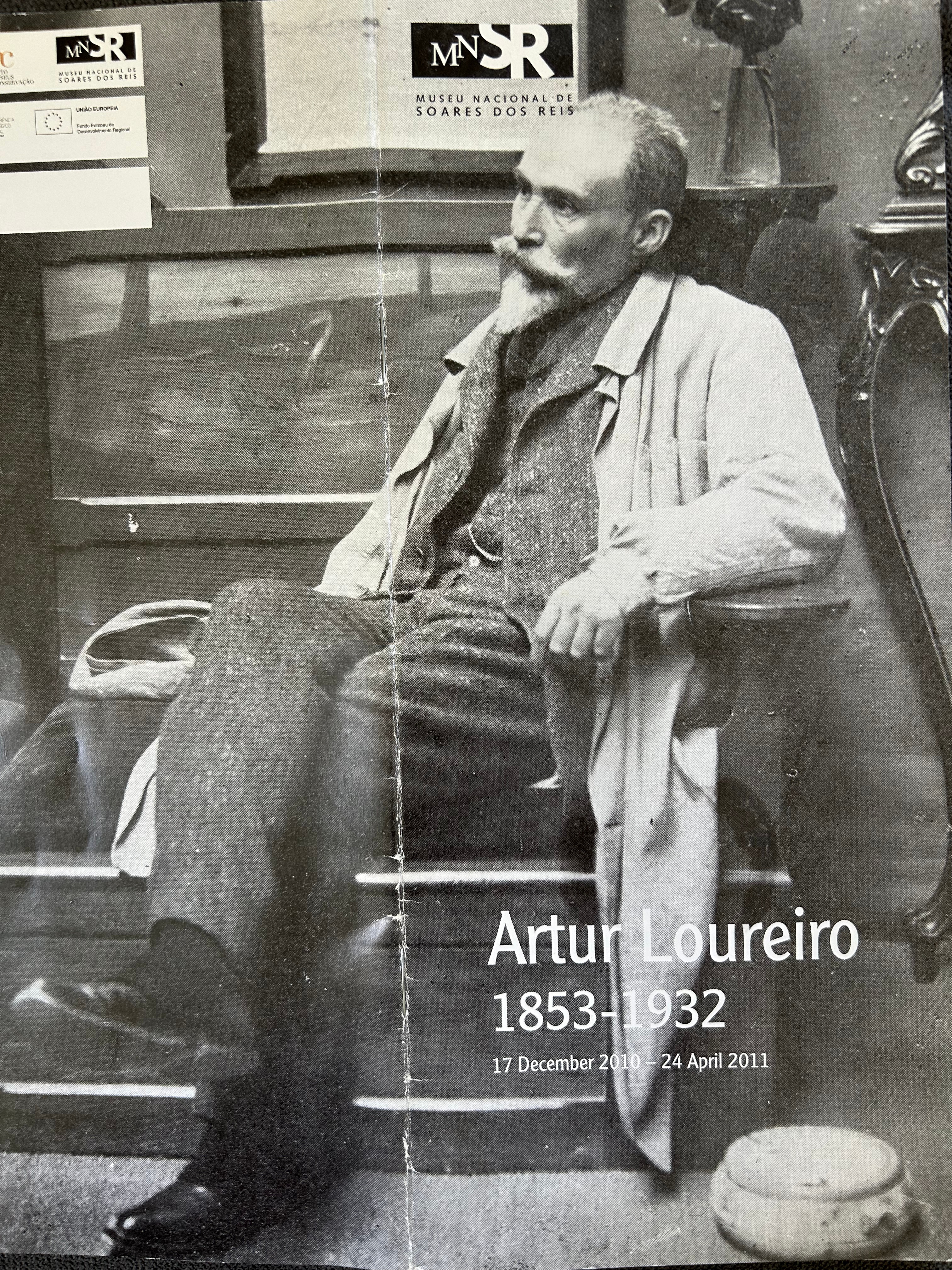
Born in Porto in 1853, he studied art, showed talent as a painter and eventually gained a scholarship in 1879 to study at the Beaux Arts in Paris, where Manet and Millet were direct influences in the naturalistic school. He met fellow artist, Australian Marie Therese Huybers (born in Hobart to Flemish and English parents in 1853).
(By the way, her older sister Jessie ‘Tasma’ Couvreur became a celebrated writer).
Arturo and Huybers married in London in 1881 and had their son Vasco the following year. The couple moved to Brolles in the forest near Fontainebleau outside Paris, where the Barbizon school of plein air outdoor painting had its hub. Both painters had productive artistic output in this exciting milieu.
In most biographical accounts of Loureiro’s life, their move to Australia is explained by his unspecified health reasons and need of a warmer climate. But one account refers to possible depressive illness and treatment by famous French neurologist Charcot.
In 1884 the Loureiro family arrived in Hobart, but soon moved to the booming metropolis of Melbourne, and the couple was quickly accepted as European sophisticates in the art scene around Fitzroy Gardens. Louis Buvelot and influential art critic James Smith were said to have immediately ‘discovered’ him.
Artur set up a busy studio in Kew, where he taught, showed his paintings and Marie Therese had a prominent role. Their circle included McCubbin, Tom Roberts and Streeton, the new Heidelberg group of plein air painters. Arturo spoke mainly French, which endeared him to the local bourgeoisie.
Loureiro was instrumental in the introduction of symbolism Down Under and his use of pastels is said to have inspired Roberts and others. He achieved wide recognition outside Australia and sold successfully, while also teaching at PLC school to have a steady income. Daughter Fauvette was born the next year.
The family often took holiday breaks on a vineyard in Healesville, where Loureiro met William Barak at the nearby Coranderkk Aboriginal Station. Barak posed for the Regulo painting (also called Son of the Soil) now in Porto, and may have also painted alongside Artur.
The years of Melbourne life apparently passed normally for the Loureiro family, with regular painterly output and plaudits for Artur. Daughter Inez was born in 1896.
Then in 1901 Artur returns definitively to Porto alone, leaving his family behind. None of the biographical notes I’ve checked explain it, apart from a scant reference to ‘health reasons’ again. Does the possible Paris experience with Charcot indicate mental health issues?
Poor Marie Therese is left behind with the kids, and has to get employment as a governess with sympathetic well-to-do families in Melbourne and in the country. She dies of throat cancer in 1907.
The Wikipedia outline of Artur’s life has him leaving Melbourne in 1901 after the death of his wife, which is obviously incorrect.
Artur goes on to have a successful art career back home and re-marries.
So folks, that’s the mystery I’ve stumbled on: what made Artur abandon his family?
Life’s too short for me to pursue this in Portuguese archives, but I may try a minor Wikipedia correction. Feel free to have a dig around if you’re a keen ferret.
(For The Spirit of the Southern Cross painting under the Regulo Australiano painting below, Loureiro may have used Marie Therese as the model).


 KOOKYNIE COURIER