The mass crossing last July of 80,000 illegal migrants (and deaths of over 100 people) into Ceuta, a Spanish enclave on the Mediterranean shores of Morocco, as a desperately hopeful gateway to Europe, has highlighted that strange colonial legacy of these European pimples on the face of modern Morocco.
Ceuta and Melilla, another Spanish enclave further east on the Moroccan coast, have a very long history of foreign occupation, from Phoenician and Roman times, then Islamic invasions, before falling under continuous Spanish rule from the late 15th century, amazingly to today – outlasting the French and Spanish protectorates period of the early 20th century and Moroccan independence in 1956.
With increasing African emigration in the 1970s and Spain’s EU accession in 1986, European anxiety about controlling its borders in North Africa ramped up. And since Spain entered the Schengen space in 1991, the EU has spent millions of euros on high security fences and surveillance on those enclave borders to keep the African hordes at bay.
Now, this may seem an odd prompt for a nostalgic personal memory, but in 1975 I passed through Melilla on the way to my new workplace and home in Oran in western Algeria. With my girlfriend, I had driven from London through France (at the height of Basque ETA trouble) and Spain to Malaga, and put the car on the ferry to Melilla, nearest port to the Algerian border.
My memory of Melilla is of a tiny town with the dusty desert right on its doorstep and no border fences or security patrols. On the contrary, while our passports were being checked, people were running across the sand not far away apparently with duty-free goods in hand, bolting for the other side, and nobody worried about it!
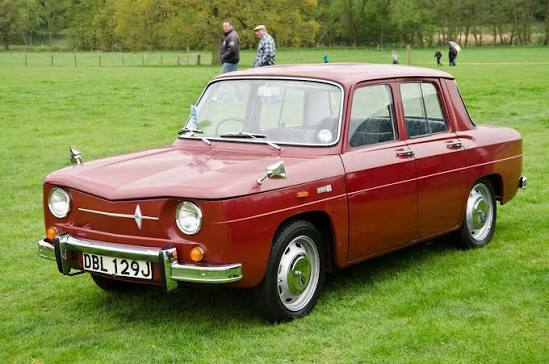
For car enthusiasts, my vehicle was a right hand drive 1964 Renault 8 bought in London, which I drove in Algeria for a year, to the bemusement of locals when they noticed me driving on the wrong side of the car. True to my anti-camera philosophy of the times, I don’t have any photos of it to show here, so just an example below.
In late 1986, on completion of my teaching contract in Oran, we took the car on the ferry to Marseille, where on arrival French frontier police put the Renault through the French Connection treatment. If you haven’t seen the famous movie, drug smugglers hid their stashes in the car door sills and fuel tanks. Apparently inspired by the movie our police searchers stripped the car doors, removed seats and the fuel tank was fully prodded. Everyone had long left the ferry when the disappointed cops put mine back together and waved us off under a night sky over that ancient port.
I know nostalgia ain’t what it used to be, but that was definitely another planet, fifty years ago!